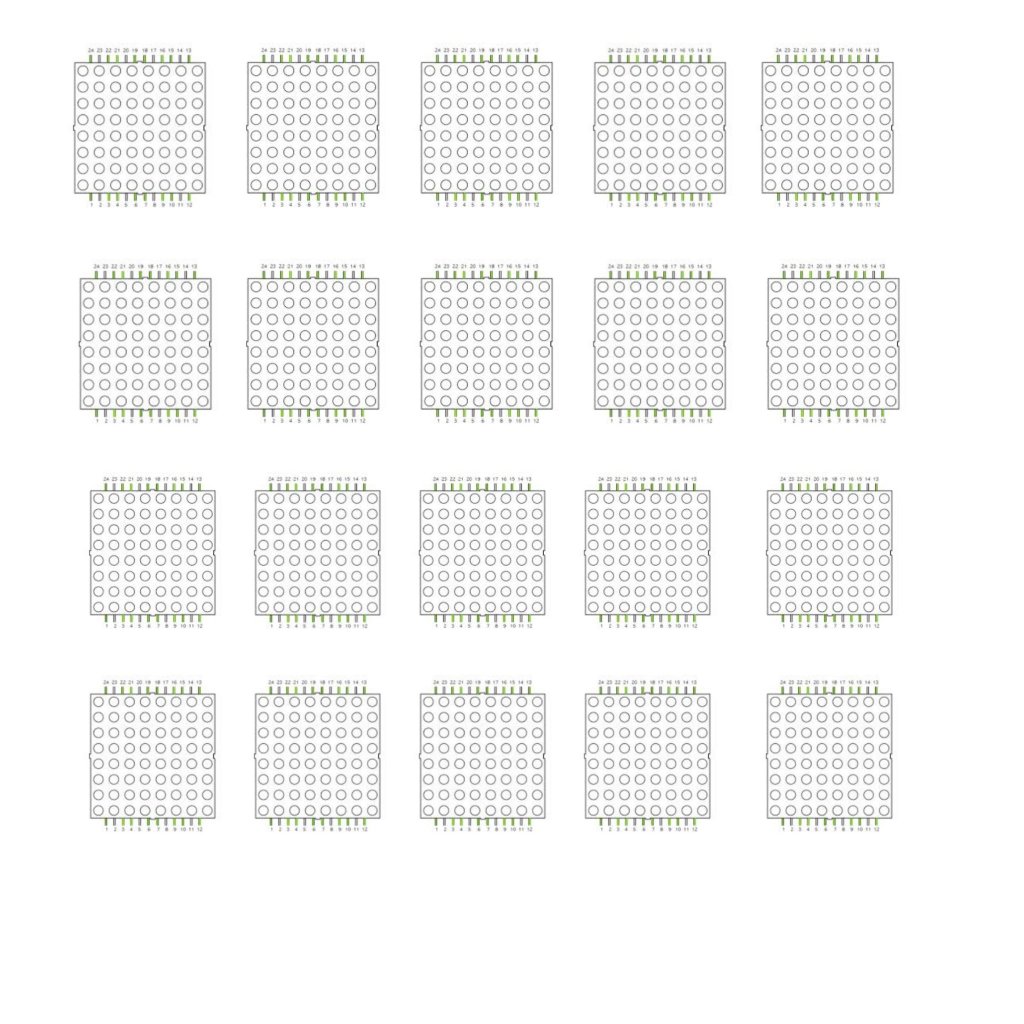
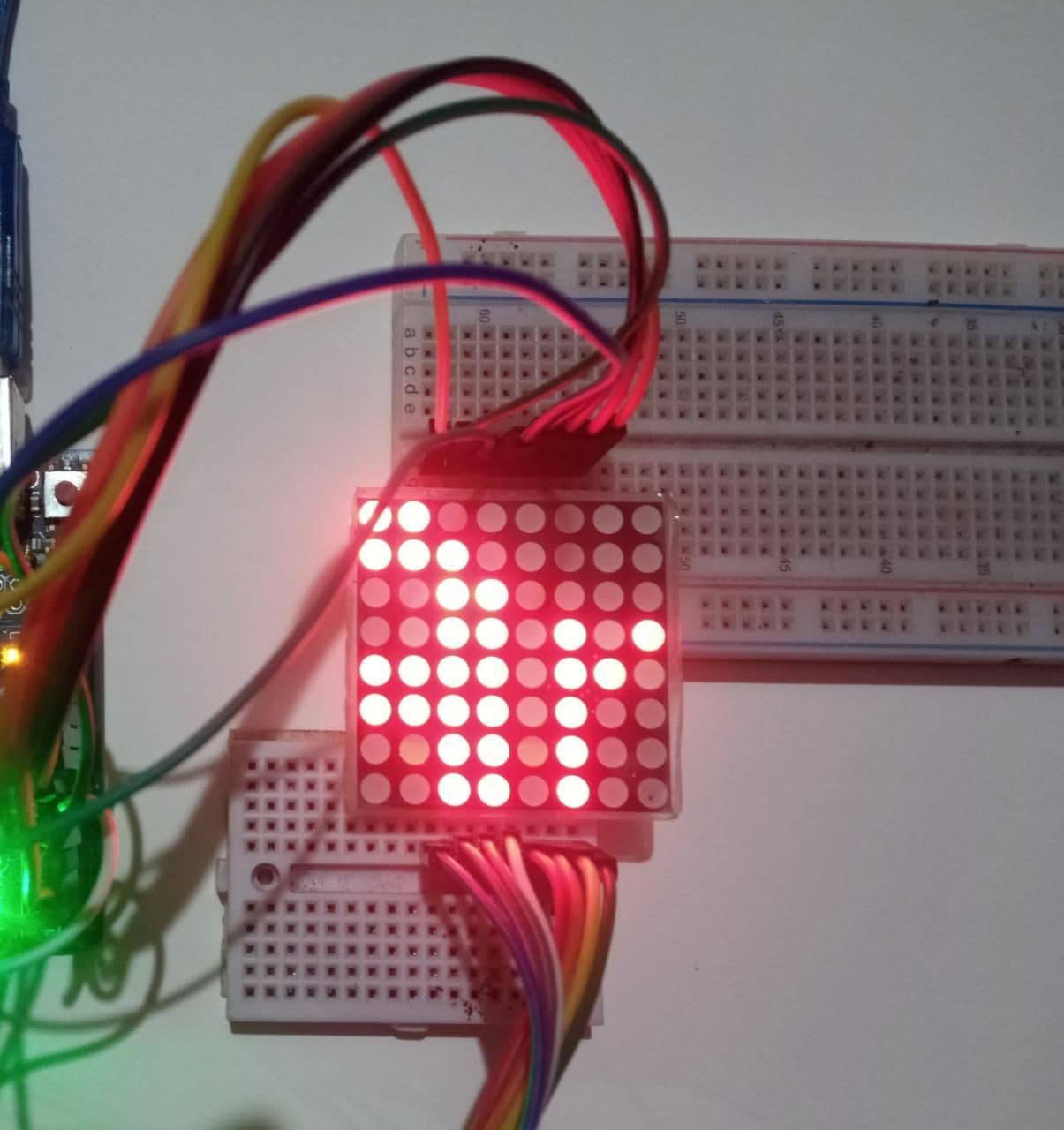
Circuit Diagram
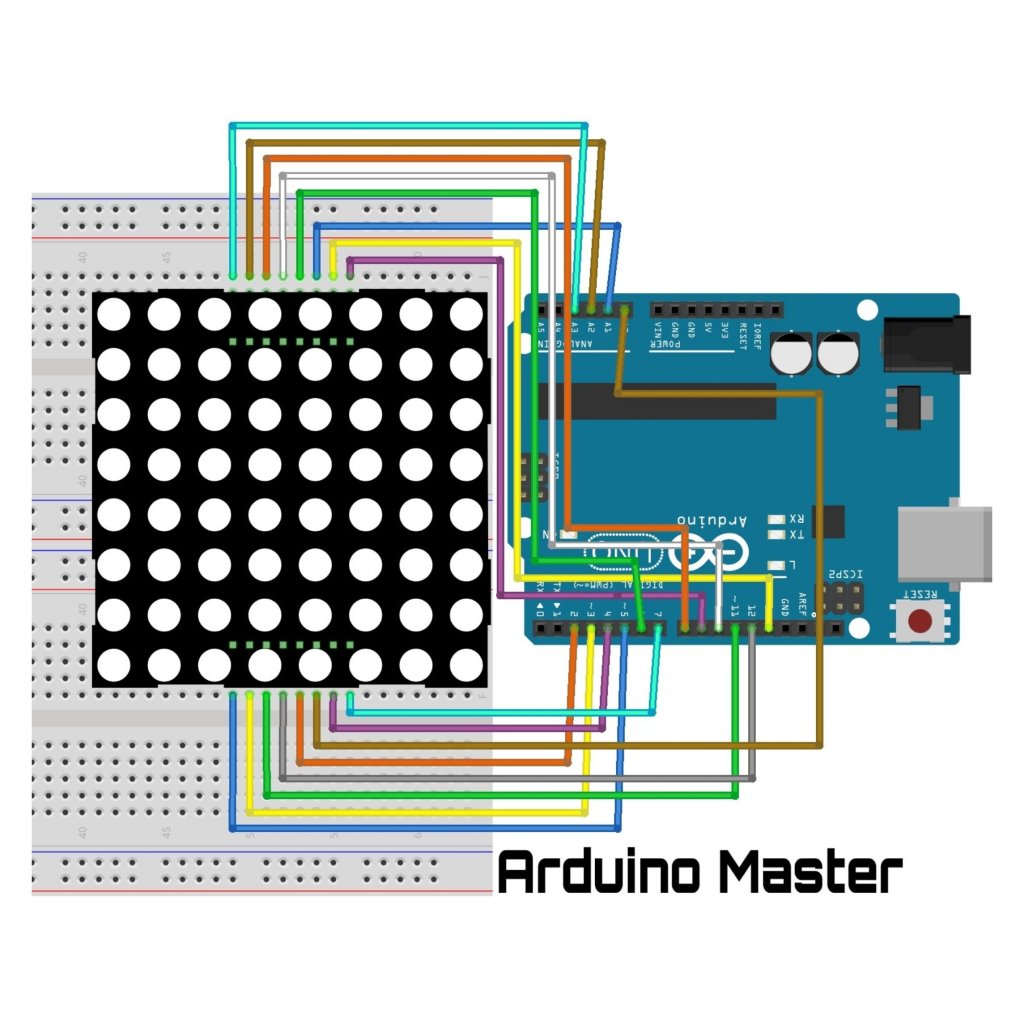
Code
// made by Siddharth haldkar
#define ROW_1 2
#define ROW_2 3
#define ROW_3 4
#define ROW_4 5
#define ROW_5 6
#define ROW_6 7
#define ROW_7 8
#define ROW_8 9
#define COL_1 10
#define COL_2 11
#define COL_3 12
#define COL_4 13
#define COL_5 A0
#define COL_6 A1
#define COL_7 A2
#define COL_8 A3
const byte rows[] = {
ROW_1, ROW_2, ROW_3, ROW_4, ROW_5, ROW_6, ROW_7, ROW_8
};
byte A[] = {B00011000,B00111100,B01100110,B01100110,B01111110,B01111110,B01100110,B01100110};
byte B[] = {B01111100,B01100110,B01100110,B01111100,B01111110,B01100110,B01100110,B01111100};
byte C[] = {B00111110,B01111110,B01100000,B01100000,B01100000,B01100000,B01111110,B00111110};
byte D[] = {B01111000,B01111100,B01100110,B01100110,B01100110,B01100110,B01111100,B01111000};
byte E[] = {B01111110,B01111110,B01100000,B01111110,B01111110,B01100000,B01111110,B01111110};
byte F[] = {B01111110,B01111110,B01100000,B01111100,B01111100,B01100000,B01100000,B01100000};
byte G[] = {B00111000,B01111100,B01100100,B01100000,B01101110,B01100100,B01111100,B00111000};
byte H[] = {B01100110,B01100110,B01100110,B01111110,B01111110,B01100110,B01100110,B01100110};
byte I[] = {B01111110,B01111110,B00011000,B00011000,B00011000,B00011000,B01111110,B01111110};
byte J[] = {B01111110,B01111110,B00011000,B00011000,B00011000,B00011000,B01111000,B01110000};
byte K[] = {B01100110,B01101100,B01111000,B01110000,B01110000,B01111000,B01101100,B01100110};
byte L[] = {B01100000,B01100000,B01100000,B01100000,B01100000,B01100000,B01111110,B01111110};
byte M[] = {B01000010,B01100110,B01111110,B01011010,B01000010,B01000010,B01000010,B01000010};
byte N[] = {B01000110,B01100110,B01100110,B01110110,B01111110,B01101110,B01100110,B01100110};
byte O[] = {B00111100,B01111110,B01100110,B01100110,B01100110,B01100110,B01111110,B00111100};
byte P[] = {B01111000,B01111100,B01100110,B01100110,B01111100,B01111000,B01100000,B01100000};
byte Q[] = {B00111100,B01000010,B01000010,B01000010,B01000010,B01001010,B00111100,B00000010};
byte R[] = {B01111100,B01100110,B01100110,B01101100,B01111000,B01111000,B01101100,B01100110};
byte S[] = {B00111100,B01111110,B01100000,B01111100,B00111110,B00000110,B01111110,B00111100};//{B00111000,B01111100,B01100000,B00110000,B00011000,B00001100,B00111100,B01111000};
byte T[] = {B01111110,B01111110,B00011000,B00011000,B00011000,B00011000,B00011000,B00011000};
byte U[] = {B01100110,B01100110,B01100110,B01100110,B01100110,B01100110,B01111110,B00111100};
byte V[] = {B01100110,B01100110,B01100110,B01100110,B01100110,B01100110,B00111100,B00011000};
byte W[] = {B01000010,B01000010,B01000010,B01000010,B01000010,B01011010,B01011010,B00100100};
byte X[] = {B01100110,B01100110,B01100110,B00111100,B00011000,B00111100,B01100110,B01100110};
byte Y[] = {B01100110,B01100110,B01100110,B01111110,B00111100,B00011000,B00011000,B00011000};
byte Z[] = {B01111110,B01111110,B00000110,B00001100,B00011000,B00110000,B01111110,B01111110};
byte Zero[] = {B00111100,B01111110,B01100110,B01100110,B01100110,B01100110,B01111110,B00111100};
byte One[] = {B00011000,B00111100,B01100110,B01100110,B01111110,B01111110,B01100110,B01100110};
byte Two[] = {B00110000,B01111000,B11001100,B11001101,B11111101,B11111101,B11001101,B11001101};
byte Three[] = {B01100000,B11110000,B10011000,B10011010,B11111011,B11111010,B10011010,B10011010};
byte Four[] = {B11000000,B11100000,B00110000,B00110101,B11110110,B11110100,B00110100,B00110100};
byte Five[] = {B10000000,B11000000,B01100000,B01101010,B11101101,B11101000,B01101000,B01101000};
byte Six[] = {B00000000,B10000000,B11000000,B11010100,B11011010,B11010000,B11010000,B11010000};
byte Seven[] = {B00000000,B00000000,B10000000,B10101000,B10110100,B10100001,B10100001,B10100001};
byte Eight[] = {B00000000,
B00000000,
B00000000,
B01010000,
B01101001,
B01000010,
B01000010,
B01000001};
byte Nine[] = {B00000000,B00000000,B00000000,B10100000,B11010011,B10000100,B10000100,B10000011};
byte Ten[] = {B00000001,B00000001,B00000001,B01000001,B10100111,B00001001,B00001001,B00000111};
byte Eleven[] = {B00000010,B00000010,B00000010,B10000010,B01001110,B00010010,B00010010,B00001110};
byte Twelve[] = {B00000100,B00000100,B00000100,B00000100,B10011101,B00100101,B00100101,B00011100};
byte Thirteen[] = {B00001000,B00001000,B00001000,B00001010,B00111010,B01001010,B01001010,B00111001};
byte Fourteen[] = {B00010000,B00010000,B00010000,B00010100,B01110100,B10010100,B10010100,B01110011};
byte Fifteen[] = {B00100000,B00100000,B00100000,B00101001,B11101001,B00101001,B00101001,B11100110};
byte Sixteen[] = {B01000000,B01000000,B01000000,B01010010,B11010010,B01010010,B01010010,B11001101};
byte Seventeen[] = {B10000000,B10000000,B10000000,B10100100,B10100100,B10100100,B10100100,B10011010};
byte Eighteen[] = {B00000000,B00000001,B00000000,B01001001,B01001001,B01001001,B01001001,B00110101};
byte Nineteen[] = {B00000000,B00000010,B00000000,B10010010,B10010010,B10010010,B10010010,B01101010};
byte Twenty[] = {B00000000,B00000100,B00000000,B00100101,B00100101,B00100101,B00100101,B11010101};
byte Twentyone[] = {B00000000,B00001000,B00000010,B01001011,B01001010,B01001010,B01001010,B10101010};
byte Twentytwo[] = {B00000000,B00010000,B00000100,B10010111,B10010100,B10010100,B10010100,B01010100};
byte Twentythree[] = {B00000000,B00100000,B00001000,B00101110,B00101001,B00101001,B00101001,B10101001};
byte Twentyfour[] = {B00000000,B01000000,B00010000,B01011100,B01010010,B01010010,B01010010,B01010010};
byte Twentyfive[] = {B00000000,B10000000,B00100000,B10111000,B10100101,B10100101,B10100100,B10100100};
byte Twentysix[] = {B00000000,B00000000,B01000000,B01110001,B01001010,B01001010,B01001010,B01001001};
byte Twentyseven[] = {B00000000,B00000000,B10000000,B11100011,B10010100,B10010100,B10010100,B10010011};
byte Twentyeight[] = {B00000000,B00000000,B00000000,B11000110,B00101001,B00101001,B00101001,B00100110};
byte Twentynine[] = {B00000000,B00000000,B00000000,B10001100,B01010010,B01010010,B01010010,B01001100};
byte Thirty[] = {B00000000,B00000000,B00000000,B00011000,B10100100,B10100100,B10100100,B10011000};
byte Thirtyone[] = {B00000000,B00000000,B00000000,B11000110,B00101001,B00101001,B00101001,B00100110};
byte Thirtytwo[] = {B00000000,B00000000,B00000000,B11000110,B00101001,B00101001,B00101001,B00100110};
byte Thirtytthree[] = {B00000000,B00000000,B00000000,B11000110,B00101001,B00101001,B00101001,B00100110};
byte Thirtyfour[] = {B00000000,B00000000,B00000000,B11000110,B00101001,B00101001,B00101001,B00100110};
void setColumns(byte b) {
digitalWrite(COL_1, (~b >> 0) & 0x01); // Get the 1st bit: 10000000
digitalWrite(COL_2, (~b >> 1) & 0x01);
digitalWrite(COL_3, (~b >> 2) & 0x01); // Get the 3rd bit: 00100000
digitalWrite(COL_4, (~b >> 3) & 0x01); // Get the 4th bit: 00010000
digitalWrite(COL_5, (~b >> 4) & 0x01); // Get the 5th bit: 00001000
digitalWrite(COL_6, (~b >> 5) & 0x01); // Get the 6th bit: 00000100
digitalWrite(COL_7, (~b >> 6) & 0x01); // Get the 7th bit: 00000010
digitalWrite(COL_8, (~b >> 7) & 0x01); // Get the 8th bit: 00000001
}
void drawScreen(byte buffer2[]){
for (byte i = 0; i < 8; i++) {
setColumns(buffer2[i]); // Set columns for this specific row
digitalWrite(rows[i], HIGH);
delay(2); // Set this to 50 or 100 if you want to see the multiplexing effect!
digitalWrite(rows[i], LOW);
}
}
float timeCount = 0;
void setup() {
// Serial.begin(9600);
for (byte i = 2; i <= 13; i++)
pinMode(i, OUTPUT);
pinMode(A0, OUTPUT);
pinMode(A1, OUTPUT);
pinMode(A2, OUTPUT);
pinMode(A3, OUTPUT);
}
void loop()
{
timeCount += 1;
if(timeCount < 40) {
drawScreen(One);
} else if (timeCount < 80) {
drawScreen(Two);
} else if (timeCount < 120) {
drawScreen(Three);
} else if (timeCount < 160) {
drawScreen(Four);
} else if (timeCount < 200) {
drawScreen(Five);
} else if (timeCount < 240) {
drawScreen(Six);
} else if (timeCount < 280) {
drawScreen(Seven);
} else if (timeCount < 320) {
drawScreen(Eight);
} else if (timeCount < 360) {
drawScreen(Nine);
} else if (timeCount < 400) {
drawScreen(Ten);
} else if (timeCount < 440) {
drawScreen(Eleven);
} else if (timeCount < 480) {
drawScreen(Twelve);
} else if (timeCount < 520) {
drawScreen(Thirteen);
} else if (timeCount < 560) {
drawScreen(Fourteen);
} else if (timeCount < 600) {
drawScreen(Fifteen);
} else if (timeCount < 640) {
drawScreen(Sixteen);
} else if (timeCount < 680) {
drawScreen(Seventeen);
} else if (timeCount < 720) {
drawScreen(Eighteen);
} else if (timeCount < 760) {
drawScreen(Nineteen);
} else if (timeCount < 800) {
drawScreen(Twenty);
} else if (timeCount < 840) {
drawScreen(Twentyone);
} else if (timeCount < 880) {
drawScreen(Twentytwo);
} else if (timeCount < 920) {
drawScreen(Twentytwo);
} else if (timeCount < 960) {
drawScreen(Twentythree);
} else if (timeCount < 1000) {
drawScreen(Twentyfour);
} else if (timeCount < 1040) {
drawScreen(Twentyfive);
} else if (timeCount < 1080) {
drawScreen(Twentysix);
} else if (timeCount < 1120) {
drawScreen(Twentyseven);
} else if (timeCount < 1160) {
drawScreen(Twentynine);
} else if (timeCount < 1200) {
drawScreen(Thirty);
} else if (timeCount < 1200) {
} else {
// back to the start
timeCount = 0; }
}
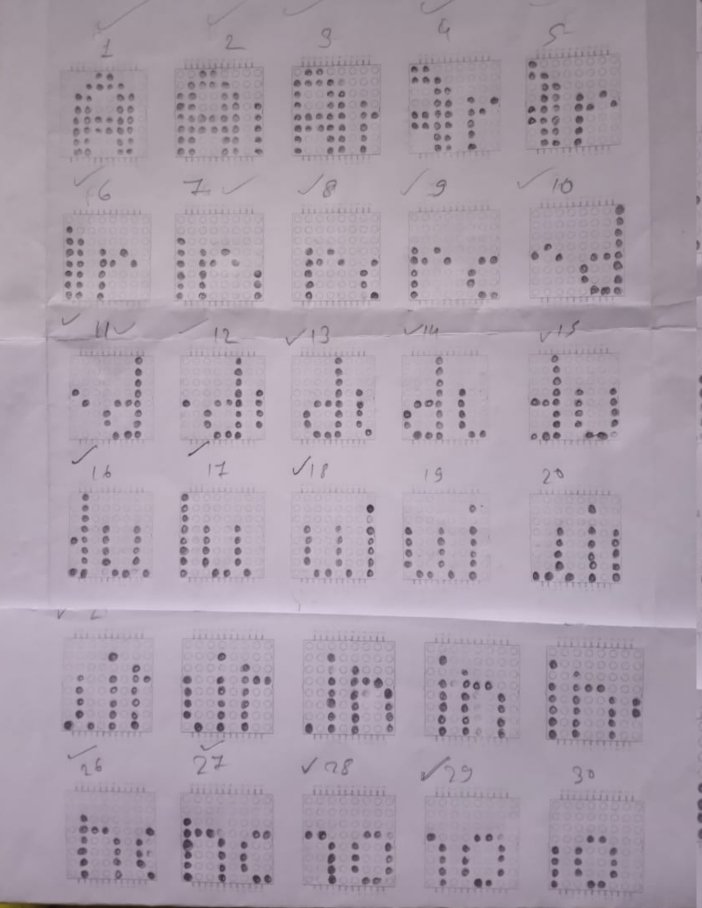
OMR sheet
For example
If you have any doubt you can ask in the comment box
I hope this will help you.
We also make school project for exhibition
contact us email id -siddhu9425@gmail.com
Jabalpur, Madhya Pradesh India
Related project———-
- Despacito code
- Despacito song code for arduino
- How to display heart on 8×8 led display using arduino UNO
- How to control 3 LED with IR remote.
- How to control 3 LED with IR remote.
- How to scroll text in 8*8 led display
- How to make Obstacle Avoiding Car ?
- Play National Anthem in buzzer using Arduino UNO
- About
- Contact



 Info_Arduino